Thursday, February 21, 2008

World's longest arch bridge to be built in Dubai


This picture , released by the World Architecture Review.is an artist's rendition of the Dubai Arch Bridge. Inspired by the " Rythemic Grace of Dubai creek " , The $817 million bride is set to be the Worlds Longest Arch Bridge upon competion.The Bridge links to the Burj Dubai and Deria districts of Dubai and will be the 6th creek crossing in the city. The 1.7 km and 205 m bridge in Dubai is set to be an Architectural marvel,official say

Sunday, December 2, 2007

Tatas to drive hydrogen bus with ISRO...

BANGALORE: If everything goes according to plan, guests at the 2010 Commonwealth Games in Delhi would be travelling from the games venue to the games village and back on pollution-free hydrogen buses!

This green initiative of ISRO and Tata Motors will see the country’s first hydrogen bus. Work has already started on the project and the prototype is expected to be ready by December 2008.

The bus will not run on an engine, but on electric power produced out of a mix of hydrogen and oxygen. It will use hydrogen fuel cell technology as against combustion technology which burns gasoline. The bus will emit nothing but a cloud of water vapour.

Tata Motors will get the frame and chassis ready while ISRO will provide the fuel technology. The first bus will be a 60-seater proto-model.

Based on its performance, modified versions will be built further on, ISRO chairman G Madhavan Nair told reporters on the sidelines of the 14th session of the Asia-Pacific Regional Space Agency Forum that opened on Thursday at the ISRO headquarters here.

The bus will roughly cost Rs 80 lakh with per kg of hydrogen gas that will run it costing around Rs 120 per kg or more. A 40-kg cylinder will allow the bus to run 560 km, ie an entire day for a typical metro bus.

“In short run it may be costly, but in long run when we are on the verge of hydrocarbon extinction, people will be willing to pay anything. We are working on a bus now because that will be more economical than a car as it would carry 60 people. In Phase II we will come out with a car with lower cost of hydrogen gas. Technological challenge of conversion of gas to electricity is immediate for ISRO now,’’ architect of the bus, V Vnanagandhi, programme director, ISRO, Ahmedabad, said.

“In fuel cell technology (buses that run on cells that store hydrogen in the form of fuel), hydrogen energy is reacted with oxygen to produce water and electricity,” Vnanagandhi explained.

Tuesday, November 27, 2007

Live Documents

Sabeer Bhatia known for his ‘Hotmail’ has gone and launched “Live Documents”, described as a ‘hybrid online-offline Office suite of applications.

Live Documents is a full-featured suite of online Office productivity applications offering functionality equivalent to Word, Excel and PowerPoint. Built using RIA technologies such as Flash and Flex, Live Documents allow users to view and edit documents within any common browser on any operating system from anywhere. Live Documents uses a Flash-based user interface that offers a richer and responsive user experience that is comparable to native Office software applications.

In addition, Live Documents is available as a optional desktop client application that wraps around Microsoft Office and embeds collaborative capabilities into these hitherto standalone software applications - Live Documents converts Microsoft Office applications from static standalone software to smart clients that are connected to the Internet and facilitate in-context document sharing (multiple people can edit a document at the same time) and management (security, access control and revision control) without requiring users to give up their familiar user interfaces. The Live Documents desktop client also ensures offline access to documents - a key failing of current online Office applications.

About InstaColl

Co-founded by Sabeer “Hotmail” Bhatia, InstaColl is a Bangalore-based software product startup offering solutions that bridge the gap between powerful, rich desktop software applications and collaborative web-based services, providing a user experience that marries the best of both worlds.

Tuesday, November 20, 2007

The EKA has been rated as the fourth fastest supercomputer in the world and fastest supercomputer in Asia.

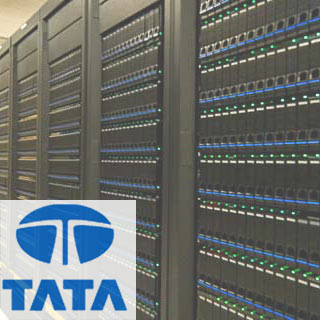
SuperComputer with Tata Logo


EKA, the supercomputer built at the Computational Research Laboratories (CRL), subsidiary of Tata in Pune has grabbed the top place in the list of Top500 Supercomputers announced at SC07, the international conference for high-performance computing, networking, storage and analysis at Reno, Nevada, USA.

The EKA has been rated as the fourth fastest supercomputer in the world and fastest supercomputer in Asia.

This Indian super computer uses nearly 1800 computing nodes and has a peak performance of 170 Teraflops (TFlops or Trillion Floating Point Operations per Second). Moreover, it delivers a sustained performance of 120 Teraflops based on the LINPACK benchmarks which are used by the world-wide community to rank supercomputers based on performance.

Celebrating this success Ratan Tata, Chairman of the Tata group said, “High performance computing solutions have an ever-increasing role in the scientific and new technological space the world over.”

He added, “The Tata group has supported this development activity and is extremely proud of the team that has developed and built this supercomputer, which is now ranked as the world’s fourth fastest. I am sure this supercomputer and its successor systems will make a major contribution to India’s ongoing scientific and technological initiatives.”

The supercomputer installed at the Indian Institute of Science in Bangalore is India’s second fastest computer and has been ranked 58th in the Top500 list. Meanwhile, the BlueGene/L System developed by IBM and National Nuclear Security Administration (NNSA) and established at DOE’s Lawrence Livermore National Laboratory in California is the fastest supercomputer in the world.